Category: General

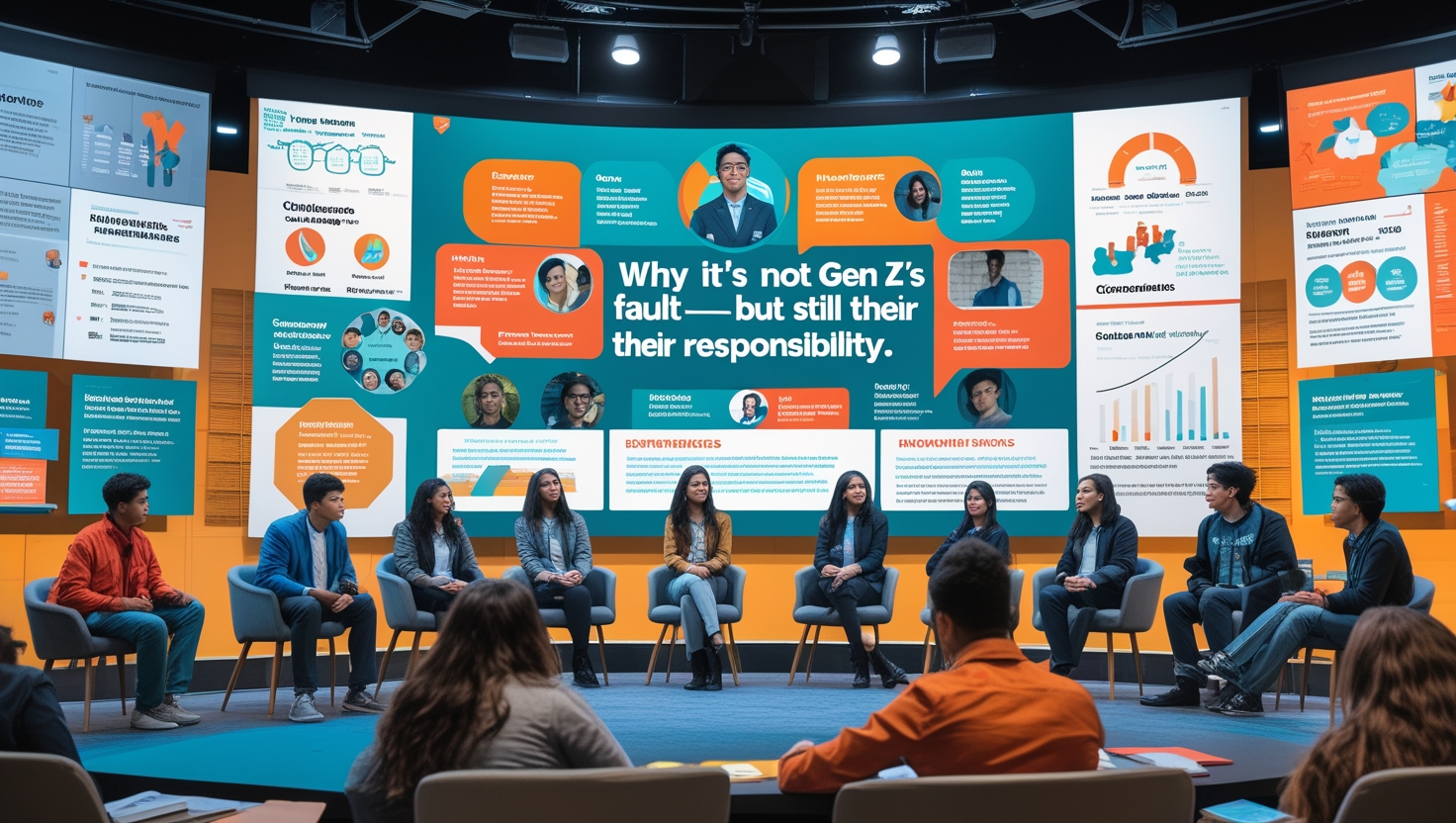
  • Why It’s Not Gen Z’s Fault But Still Their Responsibility:

    Why It’s Not Gen Z’s Fault But Still Their Responsibility:

    The modern generation often finds itself at the center of criticism from older age groups. Terms like “lazy,” “entitled,” or “unrealistic” are often thrown around when talking about Gen Z. But when you take a closer look, you realize that many of the challenges this generation faces are not the result of their own choices, but rather the consequences of decades of social, economic, and technological shifts. They were born into a world shaped by decisions made long before they arrived. However, the uncomfortable truth is that while it may not be their fault, it is still their responsibility to deal with these challenges and move forward.

    Inheriting a Different World:

    Every generation inherits the world from the one before it, but the changes between the previous generation and Gen Z are unprecedented in speed and scale. From the economic instability triggered by the 2008 financial crisis to the environmental issues created by decades of industrial expansion, these problems were in motion long before Gen Z began shaping their lives. On top of that, the rise of the internet and social media has altered the way people interact, think, and even perceive themselves.

    Gen Z didn’t create a job market where experience is demanded even for entry-level roles. They didn’t design a housing market where buying a home feels almost impossible for young professionals. They didn’t build a social system that fuels comparison through curated online content. Yet, these are the conditions they must now navigate. This sense of inheriting problems you didn’t create can be frustrating and disheartening, but it is also the starting point for growth.

    The Trap of Victimhood Thinking:

    One of the biggest dangers for any generation inheriting a difficult situation is falling into a victimhood mindset. It’s easy to point fingers at previous generations, governments, corporations, or social systems, and there’s no doubt that mistakes were made along the way. However, staying stuck in a narrative of “it’s all someone else’s fault” leaves you powerless.

    When you believe you have no control, you unconsciously give up your ability to make a difference in your own life. The truth is, while you cannot control the circumstances you were born into, you can control how you respond to them. History is filled with examples of people who came from difficult situations yet found ways to innovate, adapt, and thrive. Responsibility is not about accepting blame it is about accepting the power to create change, even in an imperfect environment.

    The Role of Mindset in Overcoming Challenges:

    Mindset plays a critical role in determining whether a challenge becomes a roadblock or an opportunity. For Gen Z, the challenges are real, rising costs of education, increased competition for jobs, climate change, and the pressure of maintaining a social media presence. But mindset determines whether these challenges lead to despair or growth.

    A fixed mindset focuses on limitations, on the belief that the world is unfair and will always be that way. A growth mindset sees these same challenges as opportunities to learn new skills, adapt, and push beyond comfort zones. While the world may feel overwhelming at times, choosing to see challenges as stepping stones instead of obstacles can dramatically change how life unfolds.

    This does not mean ignoring the reality of systemic issues it means finding a way to move forward despite them. It means asking, “What can I do right now with what I have?” instead of “Why is everything stacked against me?” That small shift in perspective can open up paths that victimhood closes off.

    Building Skills for an Uncertain Future:

    One of the most important responsibilities Gen Z faces is skill-building. The job market is evolving rapidly, and automation, artificial intelligence, and remote work are reshaping industries in ways that previous generations never had to consider. Waiting for things to “go back to normal” is not a strategy it is a trap.

    This means being proactive about learning skills that are adaptable across industries. Problem-solving, critical thinking, digital literacy, communication, and emotional intelligence are becoming just as important as technical expertise. The reality is that no matter how unfair the system feels, the people who adapt fastest are the ones who create opportunities for themselves.

    This is not about overworking or hustling endlessly; it’s about being intentional. Instead of spending endless hours scrolling through social media, dedicating time to online courses, building a portfolio, networking, or even creating personal projects can have a massive long-term payoff. Responsibility here means preparing yourself for a world that is constantly in flux, even if you wish it were more stable.

    Taking Ownership without Losing Empathy:

    There is a balance between taking responsibility for your life and acknowledging that systemic barriers exist. Responsibility does not mean pretending the challenges aren’t real—it means accepting that waiting for someone else to fix them may never work. At the same time, empathy for yourself and others is essential.

    It’s okay to acknowledge that things are harder than they should be. It’s okay to feel frustrated or discouraged. But the key is not to stay in that emotional space for too long. By all means, push for systemic changes, advocate for fairness, and speak out against injustice—but also work on the things you can control right now. That combination of self-ownership and social awareness is what drives real progress.

    The Power of Small, Consistent Actions:

    One of the most paralyzing thoughts for young people is, “The problem is so big—what difference can I make?” The truth is, no one changes their life overnight. It’s the result of small, consistent actions taken over time.

    Whether it’s improving your health, learning a new skill, saving money, or building relationships, the key is momentum. Even small wins create a sense of progress, and that progress fuels motivation. By focusing on what can be done today instead of being overwhelmed by everything that needs fixing, Gen Z can slowly build the future they want to see.

    Change rarely happens through grand gestures; it’s built through quiet discipline and persistent effort. This is where responsibility becomes empowering rather than burdensome. You’re no longer waiting for the perfect moment; you’re creating it, step by step.

    Conclusion:

    Indeed, Gen Z did not create the economic instability, environmental crises, or digital pressures they face today. These challenges are the result of decades of choices made by others. But even though it is not their fault, it is their responsibility to rise above them.

    The world doesn’t give us a choice about the circumstances we inherit, but it does give us a choice about how we respond. Taking responsibility is not about accepting blame—it’s about accepting agency. It’s about deciding that while you may not control the starting point, you can influence the direction of the journey.

    In the end, empowerment comes from action. When you stop waiting for others to fix your problems and start taking steps, no matter how small, you shift from being a passive observer of your life to being the author of it. That shift is where real change begins, and that’s the responsibility worth embracing.

    1. Why does Gen Z face so many challenges that they didn’t create?
    Gen Z inherited a world shaped by long-standing economic, environmental, and technological shifts such as the 2008 financial crisis, climate change, and the rise of social media, created by previous generations.

    2. If it’s not Gen Z’s fault, why is it still their responsibility?
    While Gen Z didn’t cause these problems, they are the ones living in and navigating this reality. Responsibility means taking action to adapt and create change, even in an imperfect system.

    3. What is the danger of a victimhood mindset?
    Focusing solely on blame keeps people powerless. Believing you have no control prevents progress, while taking responsibility empowers you to make changes despite unfair circumstances.

    4. How can Gen Z prepare for an uncertain future?
    By building adaptable skills such as problem-solving, critical thinking, digital literacy, communication, and emotional intelligence, alongside technical expertise to stay resilient in a rapidly changing job market.

    5. How can small actions make a big difference?
    Consistent, small steps like learning new skills, saving money, or improving health create momentum over time. These gradual changes compound, leading to meaningful long-term transformation.

  • The Efficiency of Instant Hot Water Dispensers

    Instant Access to Hot Water

    An instant hot water dispenser is a convenient appliance that provides hot water at the touch of a button. With the ability to instantly deliver water at a set temperature, it eliminates the need for waiting around for a kettle to boil or a water heater to warm up. This appliance is ideal for making hot drinks such as tea, coffee, or instant soups, especially in busy households or offices. Whether you need a quick cup of tea or want to fill up a pot for cooking, an instant hot water dispenser offers a hassle-free solution.

    Energy Efficiency and Cost Savings

    Compared to traditional water heating methods, an instant hot water dispenser is more energy-efficient. Instead of heating an entire kettle of water and wasting energy on unused hot water, the dispenser heats only the amount you need, reducing energy consumption. It also helps lower electricity bills by avoiding the constant re-heating of water throughout the day. With precise temperature settings, it prevents overheating, further conserving energy and ensuring that the water is always at the perfect temperature for your needs.

    Space-Saving and Convenient Design

    Instant hot water dispensers are designed to be compact, making them perfect for smaller kitchens or workplaces where space is limited. Their sleek, modern designs allow them to fit seamlessly into any kitchen decor. These dispensers can be installed in various locations, such as under the counter, to save valuable counter space. Their user-friendly interfaces and easy-to-maintain features ensure that you enjoy the convenience of instant hot water without the clutter or inconvenience of traditional water heating appliances. instant hot water dispenser

  • Augmented Reality (AR) in Retail: Enhancing Customer Engagement and Shopping Experiences

    Augmented Reality (AR) in Retail: Enhancing Customer Engagement and Shopping Experiences

    Augmented Reality (AR) technology is transforming the retail industry by offering interactive, immersive, and personalized shopping experiences that bridge the gap between online and offline retail environments. From virtual try-on experiences to in-store navigation and interactive product demonstrations, AR is reshaping how retailers engage with customers, drive sales, and differentiate their brand offerings. This article explores the applications, benefits, challenges, adoption trends, and future potentials of AR in retail.

    Applications of Augmented Reality in Retail

    1. Virtual Try-On and Product Visualization: AR enables customers to visualize products (e.g., clothing, furniture, cosmetics) in real-world environments using smartphone apps or AR-enabled mirrors, enhancing purchase confidence and reducing product return rates.
    2. Interactive In-Store Displays: AR-powered displays and kiosks offer interactive product demonstrations, digital signage, and virtual guides that educate customers about product features, benefits, and customization options directly in-store.
    3. Enhanced Customer Engagement: AR-driven interactive experiences, such as gamified shopping experiences, scavenger hunts, and personalized promotions, captivate customer interest, encourage longer dwell times, and foster brand loyalty.

    Benefits of Augmented Reality in Retail

    1. Improved Customer Experience: Personalized shopping experiences, AR-enhanced product interactions, and immersive virtual try-ons enhance customer satisfaction, engagement, and overall shopping experience both online and in-store.
    2. Increased Sales and Conversion Rates: AR-driven visualization tools and virtual try-on capabilities empower customers to make informed purchase decisions, leading to higher conversion rates, increased average order values, and reduced shopping cart abandonment.
    3. Differentiation and Competitive Advantage: Adoption of AR technologies sets retailers apart by offering innovative, interactive experiences that attract tech-savvy consumers, drive foot traffic to physical stores, and differentiate brand offerings from competitors.

    Challenges in Adopting Augmented Reality in Retail

    1. Technology Integration Costs: Implementing AR solutions requires investments in hardware (e.g., AR devices, kiosks), software development, content creation (e.g., 3D models, AR experiences), and ongoing maintenance to ensure seamless operation.
    2. User Experience Design: Designing intuitive, user-friendly AR interfaces and experiences that enhance rather than distract from the shopping journey, and ensuring compatibility across different devices and operating systems.
    3. Data Privacy and Security: Protecting customer data collected through AR applications, ensuring compliance with data protection regulations (e.g., GDPR, CCPA), and safeguarding against cybersecurity threats and unauthorized access to AR platforms.

    Adoption Trends and Future Potentials

    1. Mobile AR Applications: Continued growth of AR-enabled mobile apps and web-based AR experiences that allow customers to interact with products virtually from their smartphones, enhancing convenience and accessibility to AR technology.
    2. AR in Omni-channel Retailing: Integration of AR across omni-channel retail strategies to unify online and offline shopping experiences, facilitate seamless transitions between digital browsing and in-store interactions, and optimize inventory management.
    3. AI and Personalization: Integration of AI-driven analytics and machine learning algorithms with AR technology to personalize recommendations, customize AR experiences based on customer preferences and behaviors, and optimize marketing strategies.

    Conclusion

    Augmented Reality is revolutionizing the retail industry by offering immersive, interactive, and personalized shopping experiences that enhance customer engagement, drive sales, and differentiate brand offerings in a competitive marketplace. Overcoming challenges in technology adoption, user experience design, and data privacy requires strategic investments, collaboration with AR developers, and a customer-centric approach to integrating AR seamlessly into retail operations. By embracing AR’s transformative potential and leveraging its capabilities to enhance customer experiences, retailers can innovate, attract new audiences, and thrive in the evolving digital retail landscape.

  • Blockchain Applications: Revolutionizing Industries with Decentralized Technology

    Blockchain Applications: Revolutionizing Industries with Decentralized Technology

    Blockchain technology has emerged as a transformative innovation with the potential to revolutionize various industries by providing decentralized, secure, and transparent solutions. Originally developed as the underlying technology for cryptocurrencies like Bitcoin, blockchain now extends its capabilities to diverse applications beyond finance. This article explores the applications, benefits, challenges, adoption trends, and future potentials of blockchain technology across different sectors.

    Applications of Blockchain Technology

    1. Financial Services: Blockchain enables secure, transparent, and efficient financial transactions through cryptocurrencies (e.g., Bitcoin, Ethereum), decentralized finance (DeFi) platforms, smart contracts, and digital asset management solutions.
    2. Supply Chain Management: Blockchain enhances supply chain transparency, traceability, and efficiency by tracking goods’ movement, verifying authenticity, ensuring compliance with regulations, and reducing fraud and counterfeit products.
    3. Healthcare: Blockchain secures electronic health records (EHRs), facilitates interoperability among healthcare providers, ensures patient data privacy, and streamlines medical supply chain management and drug traceability.
    4. Governance and Voting: Blockchain-based voting systems enhance election transparency, prevent voter fraud, enable remote voting, and improve the integrity and auditability of democratic processes.
    5. Real Estate: Blockchain simplifies property transactions, automates property title transfers, reduces paperwork, enhances transparency in real estate investments, and enables fractional ownership through tokenization.

    Benefits of Blockchain Technology

    1. Decentralization and Security: Decentralized blockchain networks eliminate single points of failure, reduce cyber risks, enhance data security through cryptographic hashing, and protect transactions from tampering and unauthorized access.
    2. Transparency and Trust: Immutable blockchain ledgers provide transparent, auditable records of transactions, smart contract executions, and supply chain activities, fostering trust among stakeholders and reducing disputes.
    3. Efficiency and Cost Savings: Automation of manual processes, elimination of intermediaries, and streamlined transactions on blockchain networks reduce operational costs, enhance workflow efficiency, and accelerate business processes.

    Challenges in Blockchain Adoption

    1. Scalability: Blockchain networks face scalability limitations in processing transaction volumes, confirming transactions quickly, and supporting mass adoption without compromising network performance and efficiency.
    2. Regulatory Uncertainty: Navigating diverse regulatory landscapes, compliance requirements (e.g., KYC/AML regulations), and legal frameworks for blockchain-based applications and cryptocurrencies across different jurisdictions.
    3. Interoperability: Ensuring interoperability among different blockchain platforms, networks, and legacy systems to facilitate seamless data exchange, smart contract execution, and collaboration among stakeholders.

    Adoption Trends and Future Potentials

    1. Enterprise Blockchain Solutions: Adoption of private and permissioned blockchain networks by enterprises for supply chain optimization, financial settlements, identity verification, and regulatory compliance solutions.
    2. Interoperable Blockchain Ecosystems: Development of interoperable blockchain protocols (e.g., Cosmos, Polkadot) and cross-chain interoperability solutions to enhance scalability, connectivity, and flexibility of blockchain applications.
    3. Emerging Use Cases: Exploration of new blockchain applications in sectors such as energy trading, intellectual property rights management, voting systems, healthcare data sharing, and sustainable supply chain initiatives.

    Conclusion

    Blockchain technology holds immense potential to disrupt industries, enhance transparency, security, and efficiency, and empower decentralized applications and digital economies. Despite challenges in scalability, regulatory compliance, and interoperability, continued innovation, collaboration, and adoption of blockchain solutions are expected to drive transformative changes across various sectors. By embracing blockchain’s decentralized capabilities and leveraging its benefits, organizations can foster trust, streamline operations, and unlock new opportunities for innovation and growth in the global digital economy.