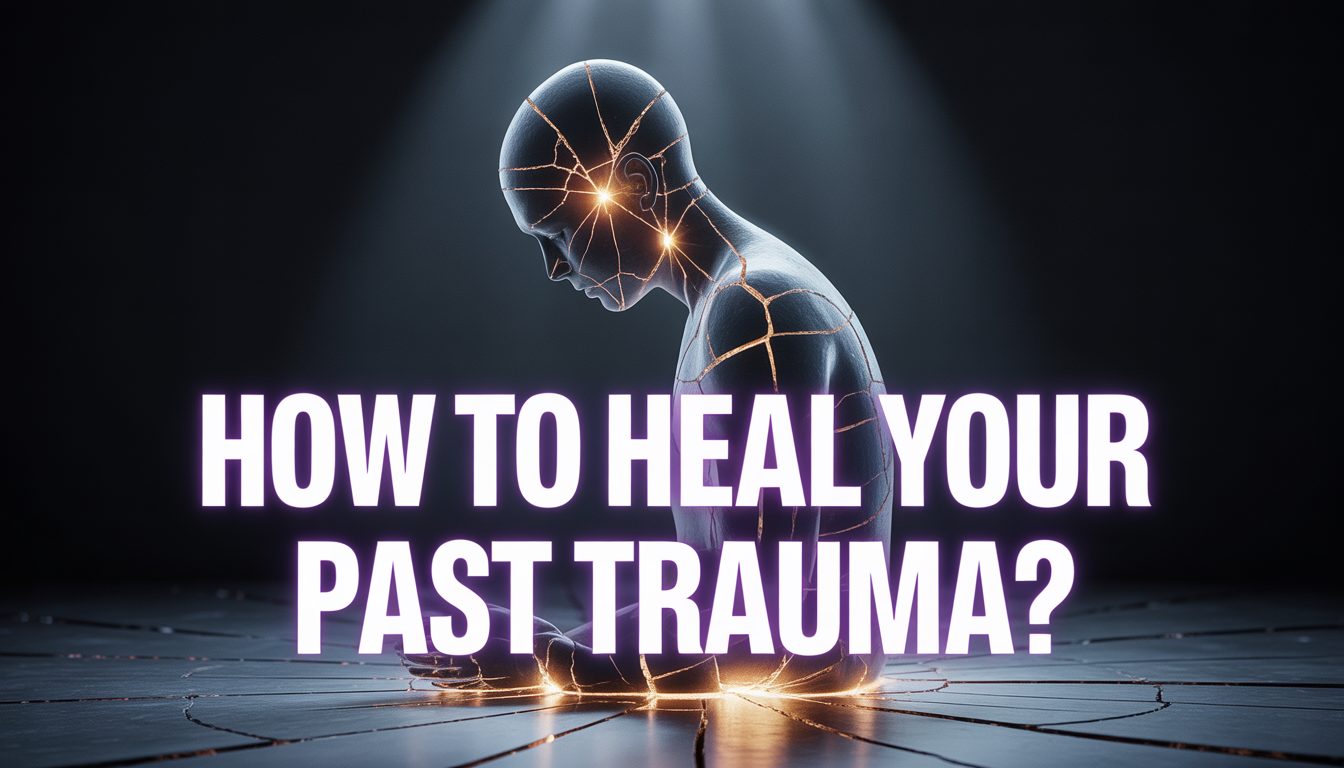
It may sound extreme to say that your past controls your future. But in most cases, it does so silently, subtly, and powerfully. The way you react to stress, the way you form relationships, the way you see yourself, and even the opportunities you choose or avoid are often influenced by experiences you had years ago.
And yet, there is hope hidden inside this truth. If we are here today, functioning, surviving, and searching for answers, it means we are not broken beyond repair. It means healing is possible. If we understand our past deeply and honestly, we can improve our future in more ways than we imagine.
Healing trauma is not about becoming someone new. It is about returning to who you were before pain convinced you otherwise.
Recognizing That Trauma Is Not Always Dramatic:
When people hear the word trauma, they often think of extreme events, such as accidents, violence, abuse, or life-threatening experiences. While those are undoubtedly traumatic, not all trauma looks dramatic from the outside.
Sometimes trauma is emotional neglect. Sometimes it is growing up in a home where love was conditional. Sometimes it is constantly being compared to others. Sometimes you are told to “stay quiet” when you want to express yourself. Sometimes it is living in financial instability where fear becomes a daily emotion.
Trauma is not defined by how shocking it appears to others. It is defined by how overwhelmed you felt at the time. If an experience exceeded your emotional capacity and made you feel unsafe, unseen, or unworthy, it left an imprint.
Many people minimize their pain by saying, “Others had it worse.” But pain is not a competition. Your nervous system does not compare stories. It responds to perceived danger and emotional overwhelm.
The first step in healing is allowing yourself to acknowledge that something affected you — without judgment, without comparison, and without shame.
Understanding How the Past Shapes the Present:
If you observe your life, you will notice patterns. Maybe you overreact to criticism. Maybe you fear abandonment even in stable relationships. Maybe you struggle with self-worth despite achievements. Maybe you avoid conflict at all costs. Maybe you become defensive quickly.
These reactions are rarely random. They are learned survival strategies.
As children or young adults, we develop coping mechanisms to protect ourselves. If love were unpredictable, we would become people pleasers. If emotions were dismissed, we learned to suppress them. If mistakes were punished harshly, we became perfectionists. If trust was broken, we built emotional walls.
These strategies helped us survive. They were intelligent responses to difficult environments. But what once protected us can later limit us.
Healing begins when we connect the dots between past experiences and present behaviors. Instead of asking, “Why am I like this?” we begin asking, “What did I go through that made me this way?”
That shift transforms self-criticism into self-understanding.
The Difference Between Remembering and Reliving:
One of the biggest fears around healing is the fear of reopening wounds. Many people avoid self-reflection because they think it will drag them back into unbearable pain.
But there is a difference between remembering and reliving.
Reliving means being emotionally overwhelmed as if the event is happening again. Remembering means observing the event with awareness and safety in the present moment.
Healing requires remembering, not reliving.
This is why creating emotional safety in the present is crucial. Whether through therapy, journaling, meditation, supportive friendships, or self-education, you build tools that allow you to explore the past without drowning in it.
When you revisit your story with awareness, you begin to see it from a new perspective. You notice that you were younger. You had fewer resources. You were doing your best with what you knew. Compassion naturally replaces harsh judgment.
And compassion is the foundation of healing.
Releasing Shame and Self-Blame:
Trauma often carries shame. Even when the event was not your fault, you may have internalized blame. Children especially tend to assume responsibility for painful situations because it gives them a sense of control. If “it was my fault,” then maybe “I can fix it.”
But this belief quietly damages self-worth.
Healing requires separating responsibility from blame. You may not be responsible for what happened to you. But you are responsible for how you care for yourself now.
This does not mean ignoring the pain. It means recognizing that staying stuck in self-blame only extends the damage.
Forgiveness can be part of healing, but it should not be forced. Sometimes the first step is forgiving yourself for not knowing better, for coping imperfectly, for surviving the only way you could at the time.
When shame begins to dissolve, space opens for growth.
Regulating the Body, Not Just the Mind:
Trauma is not stored only in thoughts. It is stored in the body. That is why certain sounds, smells, or situations trigger physical reactions, such as a racing heart, tight chest, sweaty palms, or sudden anxiety.
Your nervous system learned to stay alert.
Healing must therefore involve the body as well. Slow breathing exercises teach your system that it is safe. Physical movement releases stored tension. Adequate sleep stabilizes emotions. Spending time in nature calms overstimulation. Safe touch and connection rebuild trust.
These practices may seem simple, but they retrain your internal alarm system.
Over time, your body stops reacting to every reminder as if it were a threat. You move from survival mode into a state of regulation. And when your body feels safe, your mind can think clearly about the future.
Rewriting the Internal Narrative:
Every traumatic experience creates a story. “I am not lovable.” “I am not good enough.” “People always leave.” “Success is dangerous.” “I must not trust anyone.”
These stories operate quietly beneath the surface. They influence career choices, friendships, romantic relationships, and self-esteem.
Healing involves identifying these internal narratives and questioning them.
Is it true that you are unlovable, or did someone fail to love you properly? Is it true that you always fail, or did you face obstacles without support? Is it true that you are weak, or were you simply overwhelmed?
When you challenge old narratives, you create new ones. “I am learning.” “I deserve respect.” “I am allowed to make mistakes.” “My past does not define my worth.”
This does not mean pretending everything was positive. It means refusing to let one chapter define the entire book.
Setting Boundaries as an Act of Healing:
Many people who experienced trauma struggle with boundaries. They may tolerate disrespect. They may overextend themselves. They may fear saying no. They may prioritize others’ comfort over their own well-being.
But boundaries are not selfish. They are protective.
When you set a boundary, you are telling yourself that your emotional safety matters. You are teaching others how to treat you. You are breaking patterns that once kept you stuck.
At first, this may feel uncomfortable. Guilt may arise. Fear of rejection may surface. But over time, boundaries strengthen self-respect, and self-respect changes your future.
Choosing Growth Instead of Repetition:
Without awareness, trauma repeats itself. We are unconsciously drawn to familiar dynamics, even if they are unhealthy. We recreate emotional environments that match our past because they feel known.
Healing interrupts this cycle when you understand your triggers, and you pause before reacting. When you recognize red flags, you walk away sooner. When you value yourself, you choose differently. This is how understanding the past improves the future.
Growth is not dramatic. It is often quiet. It looks like choosing peace over chaos. It looks like expressing your feelings calmly. It looks like investing in therapy or personal development. It looks like walking away from environments that drain you, small decisions repeated consistently, create a radically different life.
Accepting That Healing Is Not Linear:
There will be days when you feel strong and self-aware. There will be days when old emotions resurface unexpectedly. This does not mean you are failing. It means healing is layered. Progress is rarely a straight line. Sometimes you revisit the same memory from a deeper level of understanding, and each time, it hurts a little less. Each time, you gain a little more clarity.
Patience is essential. You are undoing years, sometimes decades of conditioning. That takes time. The goal is not perfection. The goal is awareness and gradual transformation.
Building a Future With Intention:
If we are here today, it means we survived our past. Survival proves resilience. And resilience can be transformed into strength.
When you understand your past, you no longer build your future blindly. You choose careers that align with your values rather than your fears. You form relationships based on mutual respect rather than emotional dependency. You pursue goals because they inspire you, not because they validate you.
You stop reacting to life and start designing it.
Healing your past trauma is not about becoming emotionless. It is about becoming conscious. It is about turning pain into wisdom. It is about breaking cycles that may have existed for generations.
It may feel extreme to confront your history. It may feel easier to ignore it. But if you are here reading, reflecting, searching, it means a part of you wants freedom, and freedom begins with understanding.
If we understand our past, we truly can improve our future in many ways. Not magically. Not instantly. But intentionally, your past shaped you. It does not own you; healing is possible. And your future is still waiting to be written this time, with awareness.
Conclusion:
Healing from past trauma is not about erasing what happened or pretending it didn’t affect you. It is about understanding how those experiences shaped you and then consciously choosing how they will shape you moving forward. Your past may have influenced your thoughts, reactions, and beliefs, but it does not have to define your future.
The journey of healing begins with awareness and compassion. When you stop blaming yourself and start understanding your patterns, everything shifts. What once felt like flaws begin to make sense as survival responses. And once you see them clearly, you gain the power to change them.
True healing happens when you address both the mind and the body, when you allow yourself to feel without being overwhelmed, and when you rewrite the stories you have been carrying for years. It also requires courage the courage to set boundaries, to choose growth over familiarity, and to face discomfort instead of avoiding it.
Most importantly, healing is not linear. There will be setbacks, emotional waves, and moments of doubt. But each step, no matter how small, moves you forward. Over time, those small steps create a life that is no longer controlled by past pain, but guided by present awareness.
You are not broken. You adapted. And now, you have the opportunity to evolve. Your past shaped you, but it does not own you. With patience, self-awareness, and intention, you can build a future that reflects who you truly are not what you went through.
FAQs:
1. Can trauma really affect my present behavior and decisions?
Yes, trauma often shapes how you think, react, and relate to others. Many of your current patterns, like fear of rejection, overthinking, or people-pleasing, can be linked to past experiences that your mind and body are still trying to process.
2. Do I need therapy to heal from trauma?
Therapy can be extremely helpful, but it is not the only path. Journaling, self-reflection, meditation, supportive relationships, and educating yourself about emotional health can also contribute to healing. However, for deep or overwhelming trauma, professional guidance is highly recommended.
3. Why do I feel worse when I start thinking about my past?
Because you are finally facing emotions that were previously suppressed. This can feel intense at first. The key is to approach these memories with safety and awareness, not to relive them, but to understand and process them gradually.
4. How long does it take to heal from trauma?
There is no fixed timeline. Healing depends on the depth of the trauma, your environment, and the effort you put into self-awareness and growth. It is a gradual process that unfolds over time rather than a quick fix.
5. Is it possible to completely “move on” from trauma?
Healing does not mean forgetting or erasing the past. It means reaching a point where the past no longer controls your emotions, decisions, or sense of self. You may remember what happened, but it no longer defines or limits you.